Core Web Vitals Explained Simply
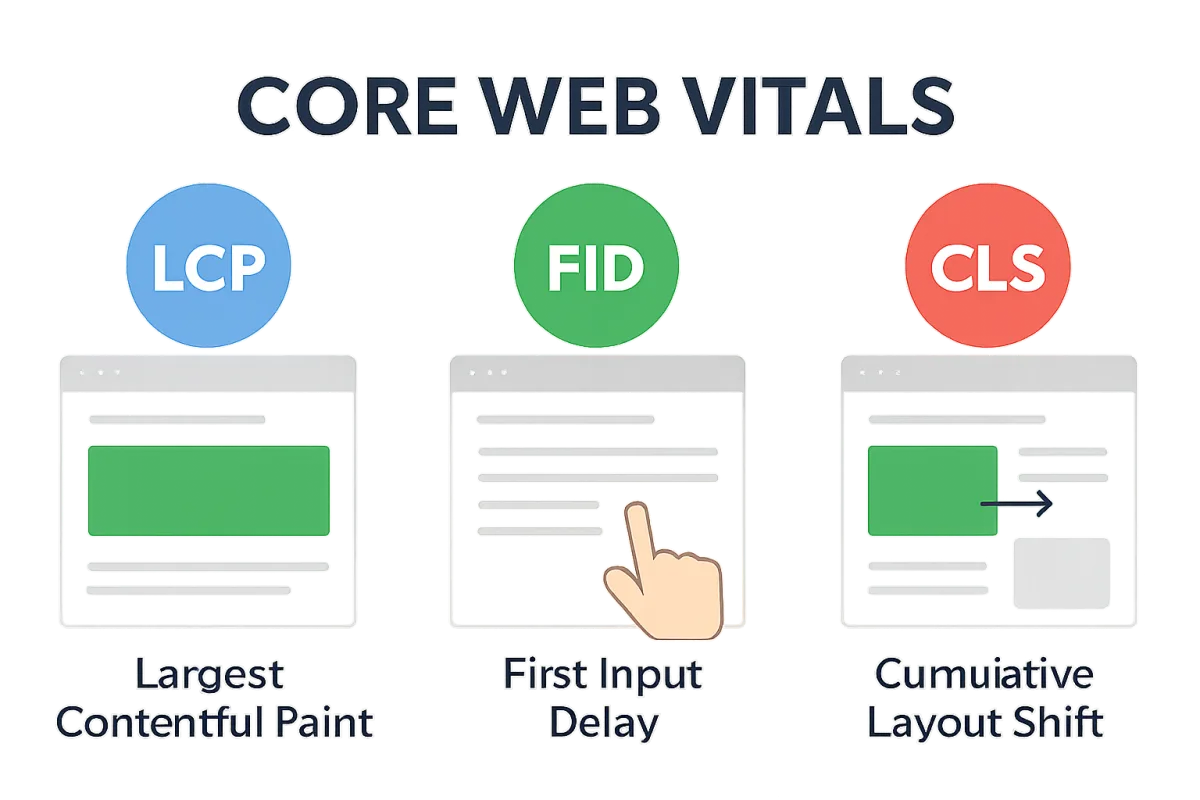
Core Web Vitals are essential metrics that measure user experience on the web, focusing on loading performance, interactivity, and visual stability. These metrics include Largest Contentful Paint (LCP), First Input Delay (FID), and Cumulative Layout Shift (CLS). Optimizing these factors can significantly enhance user satisfaction and improve search engine rankings.
Quick Summary
Core Web Vitals are critical indicators of user experience on websites. They consist of three main metrics: LCP, FID, and CLS, which assess loading speed, interactivity, and layout stability. Understanding and optimizing these metrics can lead to better user engagement and improved SEO performance.
Curator Notes
Core Web Vitals are a set of performance metrics introduced by Google to quantify the user experience on websites. The three primary metrics are Largest Contentful Paint (LCP), which measures loading performance; First Input Delay (FID), which gauges interactivity; and Cumulative Layout Shift (CLS), which assesses visual stability. Each of these metrics plays a crucial role in how users perceive the speed and reliability of a website.
Improving these metrics can lead to higher user satisfaction and retention rates. For instance, a fast-loading page (good LCP) keeps users engaged, while a low FID ensures that users can interact with the page without delays. Additionally, a stable layout (low CLS) prevents frustrating shifts in content as the page loads, enhancing the overall experience.
As Google increasingly factors these metrics into search rankings, optimizing for Core Web Vitals is essential for any website aiming for visibility and user engagement.
Best Sources
Videos and Community Signals
corewebvitals #onescales #pagespeed This video tutorial explains in simple non technical terms about Google's Core Web Vitals: ...
In this hands-on talk, we cover tips & tricks for optimizing your user-experience to meet the Core Web Vitals. We use tools like ...
Comparison
| Decision Point | Good Starting Choice | When to Go Further |
|---|---|---|
| Online booking | A simple booking page with service duration, staff assignment and confirmation emails. | Multi-location calendars, deposits, cancellation rules and waitlist handling. |
| Client records | Basic notes, visit history and contact details are enough to start. | Segmentation, purchase history, memberships, forms and before-after notes become more important. |
| Reminders | SMS or email reminders help reduce no-shows without adding admin work. | Automated rebooking, follow-up campaigns and missed-appointment recovery matter more. |
| Payments | Card capture and checkout should be simple and transparent. | Packages, memberships, staff commissions, tips and refunds need cleaner reporting. |
| Marketing | Light email or SMS campaigns are useful if they are easy to run. | Automated win-back, birthday offers, review requests and audience segments create more leverage. |
FAQ
Core Web Vitals are a set of metrics that measure the user experience on a website, focusing on loading speed, interactivity, and visual stability.
They are crucial for enhancing user satisfaction and are also a ranking factor for Google search results.
You can improve them by optimizing images, reducing server response times, and ensuring that your layout remains stable during loading.