Bootstrapping vs Raising Funding
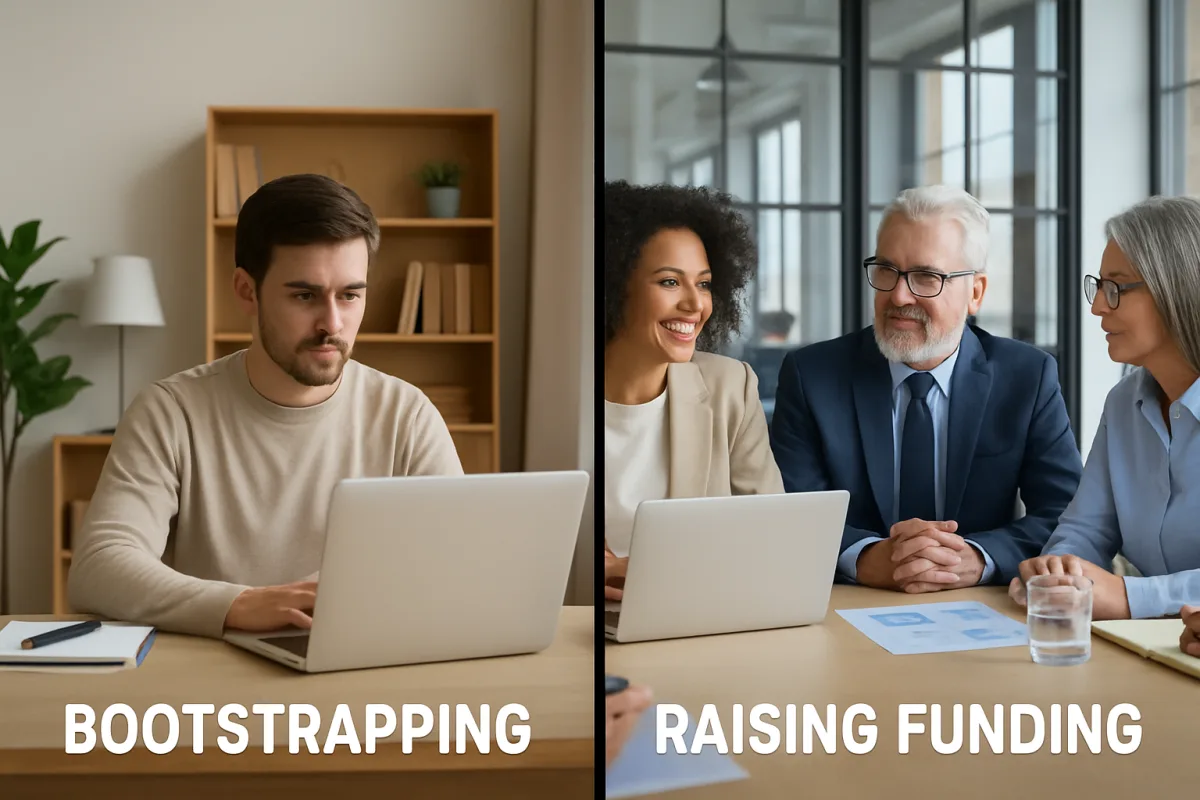
Bootstrapping involves self-funding your business using personal savings or revenue, allowing for complete control and no debt. Raising funding, on the other hand, involves seeking external investors or loans, which can provide significant capital but may dilute ownership and control. Each approach has its pros and cons, and the choice depends on your business goals, industry, and growth strategy.
Quick Summary
Bootstrapping and raising funding are two primary methods for financing a startup. Bootstrapping allows for full control and independence but may limit growth speed due to resource constraints. Raising funding can accelerate growth but often requires giving up some ownership and control. Understanding the trade-offs is essential for making the right choice for your business.
Curator Notes
Bootstrapping is a method where entrepreneurs use their own savings or revenue generated by the business to fund operations and growth. This approach allows for complete control over the business, as no external investors are involved. However, it can limit the speed of growth due to resource constraints, making it suitable for businesses that can grow steadily without significant capital investment.
On the other hand, raising funding involves seeking external capital through investors or loans. This can provide a significant influx of cash, enabling rapid growth and expansion. However, it often comes with the trade-off of diluting ownership and possibly losing some control over business decisions.
This method is typically preferred by startups in industries that require substantial upfront investment or those looking to scale quickly. Ultimately, the decision between bootstrapping and raising funding should align with the entrepreneur's vision, the nature of the business, and the market conditions. Each method has its unique advantages and challenges, and understanding these can help in making an informed choice.
Recommended Options
- Y Combinator: Best for Startups looking for mentorship and funding Offers extensive resources, networking opportunities, and seed funding. Signal checked: Highly regarded in the startup community with numerous successful alumni. Alternative to consider: Techstars
- Indiegogo: Best for Entrepreneurs seeking crowdfunding for product launches Allows businesses to raise funds directly from consumers, validating ideas early. Signal checked: Successful campaigns have raised millions, showcasing its effectiveness. Alternative to consider: Kickstarter
- U.S. Small Business Administration SBA Loans: Best for Established businesses needing capital without giving up equity Offers low-interest loans backed by the government, making them accessible. Signal checked: Widely used by small businesses across the U.S. with favorable terms. Alternative to consider: Traditional bank loans
Best Sources
Videos and Community Signals
Within the world of startups, you'll find lots of discourse online about the experiences of founders bootstrapping their startup ...
Learn the difference between Bootstrapping vs VC Funding (Venture Capital Funding) and how each impacts control, growth, and ...
Comparison
| Decision Point | Good Starting Choice | When to Go Further |
|---|---|---|
| Control over business decisions | Bootstrapping allows full control. | Raising funding may dilute control. |
| Speed of growth | Bootstrapping may slow growth due to limited resources. | Raising funding can accelerate growth significantly. |
| Financial risk | Bootstrapping involves personal financial risk. | Raising funding shifts risk to investors. |
| Ownership stake | Bootstrapping retains full ownership. | Raising funding often requires giving up equity. |
FAQ
Bootstrapping is the process of funding a business using personal savings or revenue generated from the business itself.
Raising funding can provide significant capital for growth, access to valuable networks, and expertise from investors.
It depends on the startup's goals, industry, and growth strategy. Bootstrapping offers control, while raising funding can accelerate growth.