DeFi Explained for Beginners
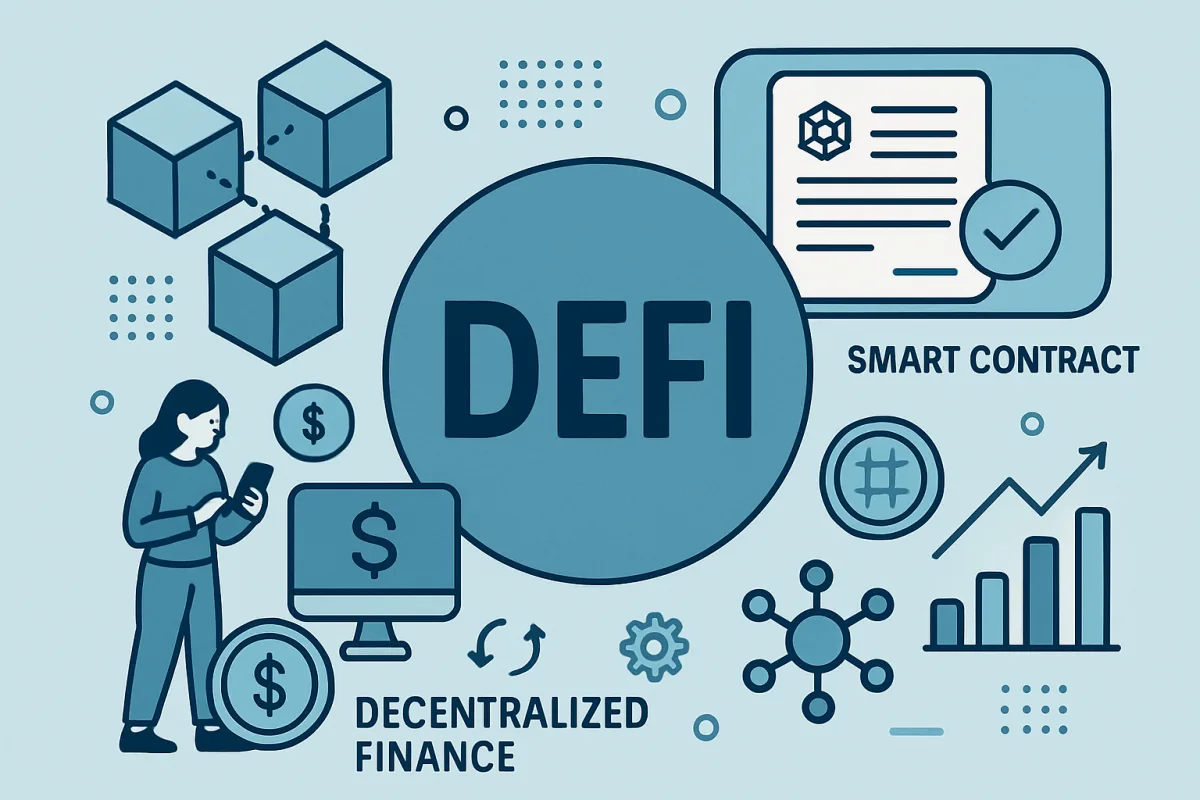
Decentralized Finance (DeFi) refers to a financial system built on blockchain technology that operates without traditional intermediaries like banks. It enables users to lend, borrow, trade, and earn interest on their assets through smart contracts. DeFi aims to democratize finance by making it accessible to anyone with an internet connection, thus reducing costs and increasing transparency. Key platforms include Ethereum, Binance Smart Chain, and Solana, each offering unique features and capabilities.
Quick Summary
DeFi, or Decentralized Finance, is a blockchain-based financial system that eliminates intermediaries, allowing users to engage in financial activities like lending, borrowing, and trading directly. It promotes accessibility, transparency, and lower costs, making financial services available to a global audience. Major platforms include Ethereum and Binance Smart Chain.
Curator Notes
Decentralized Finance (DeFi) is reshaping the financial landscape by leveraging blockchain technology to provide financial services without the need for traditional intermediaries such as banks. This system operates on decentralized networks, primarily using smart contracts—self-executing contracts with the terms of the agreement directly written into code. Users can engage in various financial activities, including lending, borrowing, trading, and earning interest on their assets, all while maintaining control over their funds.
The appeal of DeFi lies in its accessibility. Anyone with an internet connection can participate, making it a viable option for individuals in regions with limited banking infrastructure. Furthermore, DeFi platforms often offer lower fees and more favorable terms compared to traditional financial institutions.
However, users should be aware of the risks involved, including smart contract vulnerabilities and market volatility. Understanding these factors is crucial for anyone looking to navigate the DeFi space effectively.
Recommended Options
- Aave: Best for Lending and borrowing Aave is known for its user-friendly interface and innovative features like flash loans, allowing users to borrow instantly without collateral. Signal checked: Aave has a strong community and consistently ranks high in total value locked (TVL) among DeFi protocols. Alternative to consider: Compound
- Uniswap: Best for Decentralized trading Uniswap is a leading decentralized exchange (DEX) that allows users to swap tokens directly from their wallets without the need for an intermediary. Signal checked: Uniswap has the highest trading volume among DEXs and is widely recognized for its liquidity pools. Alternative to consider: SushiSwap
- MakerDAO: Best for Stablecoin generation MakerDAO allows users to generate the DAI stablecoin by locking up collateral, providing a stable asset in the volatile crypto market. Signal checked: MakerDAO is one of the oldest and most trusted DeFi projects, with a significant market share in stablecoin issuance. Alternative to consider: Celo
Best Sources
Videos and Community Signals
You might be searching the web trying to figure out "What is Defi?". Well, in this video we cover exactly what defi (or decentralized ...
So have you ever been wondering how lending and borrowing works in DeFi? How are the supply and borrow rates determined?
Comparison
| Decision Point | Good Starting Choice | When to Go Further |
|---|---|---|
| User Experience | Aave offers a straightforward interface for beginners. | Uniswap provides advanced trading features for experienced users. |
| Liquidity Options | MakerDAO allows for stablecoin generation with limited collateral options. | Aave offers a wider variety of assets for lending and borrowing. |
| Market Volume | Uniswap has a high trading volume, ensuring better liquidity. | SushiSwap offers additional incentives for liquidity providers. |
FAQ
DeFi stands for Decentralized Finance, a financial system built on blockchain technology that operates without intermediaries.
DeFi uses smart contracts on blockchain networks to facilitate financial transactions directly between users.
Risks include smart contract vulnerabilities, market volatility, and potential loss of funds due to hacks.