Note Taking Methods Compared
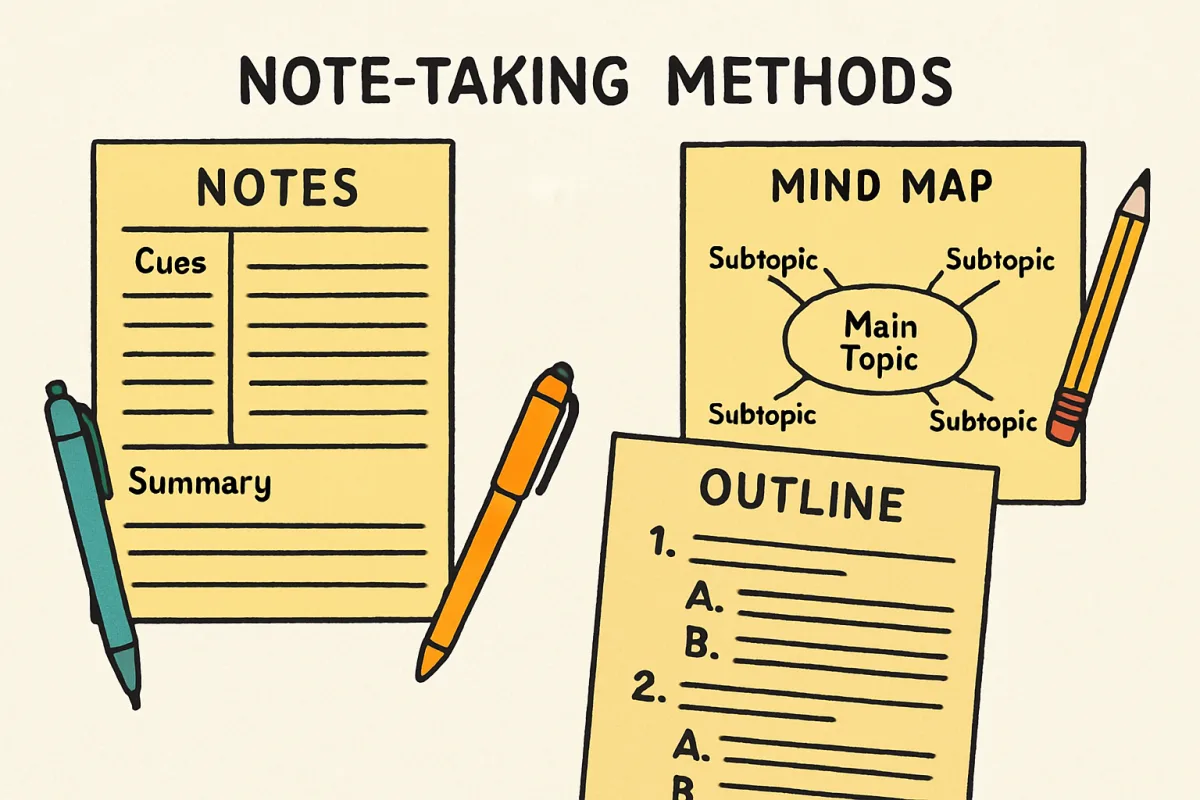
Note-taking methods vary widely, each offering unique advantages depending on the user's needs. Popular methods include the Cornell Method, Mind Mapping, and the Outline Method. The Cornell Method is effective for structured notes and review, while Mind Mapping encourages creativity and visual learning. The Outline Method is straightforward and ideal for hierarchical information. Each method has its strengths and is suited for different learning styles and objectives.
Quick Summary
This guide compares various note-taking methods, highlighting their strengths and ideal use cases. Key methods include the Cornell Method for structured notes, Mind Mapping for visual learners, and the Outline Method for straightforward organization. Understanding these methods can enhance your learning and retention.
Curator Notes
Note-taking is a crucial skill for effective learning and information retention. Among the most popular methods, the Cornell Method stands out for its systematic approach. It divides the page into sections for cues, notes, and summaries, facilitating easy review and self-testing.
This method is particularly beneficial for students who need to prepare for exams or retain large amounts of information. Mind Mapping, on the other hand, is a visual technique that allows users to organize thoughts and ideas in a non-linear fashion. This method is excellent for brainstorming sessions or when exploring complex topics, as it promotes creativity and helps visualize relationships between concepts.
It’s especially useful for visual learners who benefit from seeing information laid out graphically. The Outline Method is another straightforward approach that organizes information hierarchically. This method is ideal for lectures or reading materials that follow a clear structure.
It allows for easy navigation of topics and subtopics, making it easier to review later. Each method has its trade-offs, and the best choice often depends on individual learning styles and the specific context of the information being processed.
Recommended Options
- Cornell Note Taking System: Best for students preparing for exams Structured format aids in review and retention. Signal checked: Widely used in educational settings. Alternative to consider: Outline Method
- Mind Mapping: Best for creative thinkers and visual learners Encourages exploration and visual representation of ideas. Signal checked: Popular in brainstorming and project planning. Alternative to consider: Traditional note-taking
- Outline Method: Best for structured lectures and reading Clear hierarchy makes information easy to follow. Signal checked: Commonly taught in academic settings. Alternative to consider: Cornell Method
Best Sources
Videos and Community Signals
The first step in honing your new study skills is to take better notes. This week Thomas will tell you everything you need to know to ...
Summarize videos instantly with our Course Assistant plugin, and enjoy AI-generated quizzes: https://bit.ly/ch-ai-asst A crash ...
Comparison
| Decision Point | Good Starting Choice | When to Go Further |
|---|---|---|
| Structure | Outline Method - Simple and clear hierarchy. | Cornell Method - Detailed sections for cues and summaries. |
| Visual Representation | Cornell Method - Limited visual aid. | Mind Mapping - Strong visual connections and creativity. |
| Ease of Review | Outline Method - Straightforward for quick reviews. | Cornell Method - Designed specifically for effective review. |
FAQ
The Cornell Method is often recommended for exams due to its structured format that aids in review and retention.
Yes, many people find success in combining methods, such as using Mind Mapping for brainstorming and the Cornell Method for structured notes.
Mind Mapping is typically the best choice for visual learners as it allows for creative and graphical representation of information.