SMART Goals vs Outcome Goals
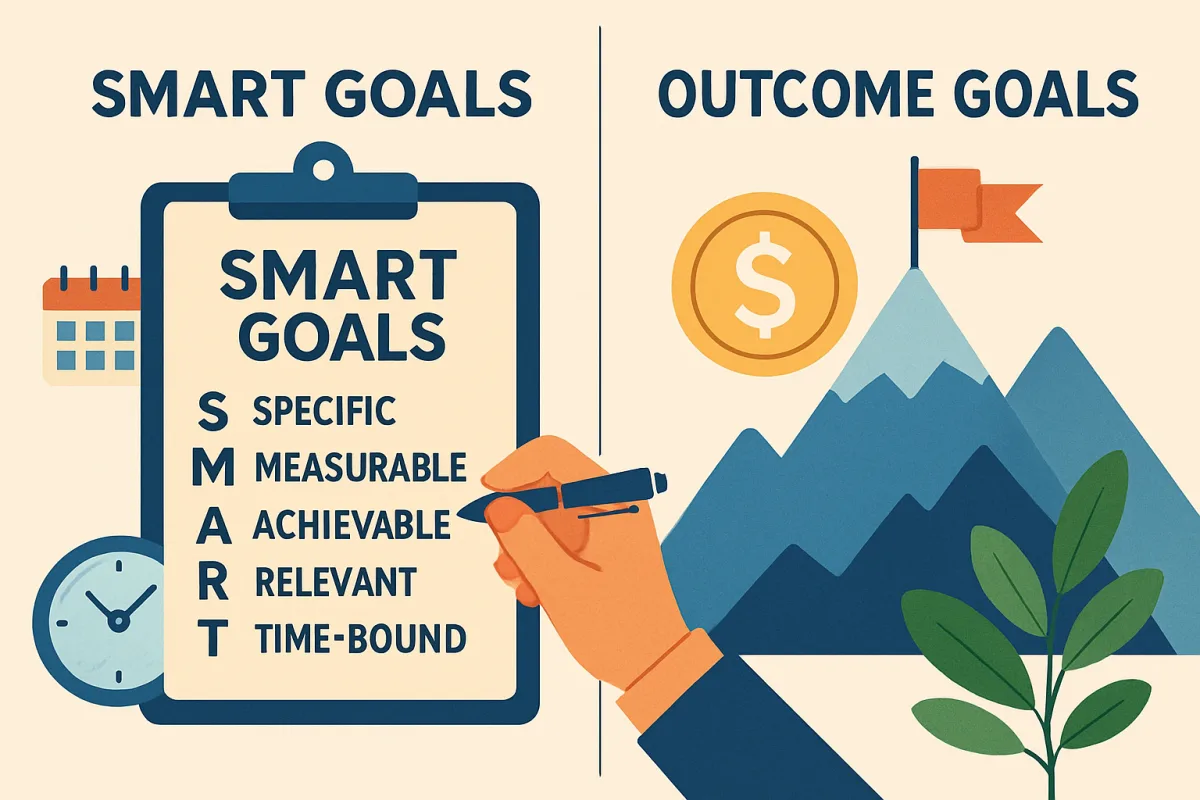
SMART goals and outcome goals serve different purposes in personal and professional development. SMART goals are specific, measurable, achievable, relevant, and time-bound, focusing on the process and steps needed to achieve a desired outcome. In contrast, outcome goals emphasize the end result, such as winning a competition or achieving a specific sales target. Understanding these distinctions helps individuals choose the right approach for their objectives, balancing process-oriented planning with desired outcomes.
Quick Summary
Understanding the difference between SMART goals and outcome goals is crucial for effective goal-setting. SMART goals provide a structured framework that emphasizes specific, measurable, achievable, relevant, and time-bound criteria, making them practical for tracking progress. Outcome goals, however, focus on the end result, such as achieving a specific milestone. By recognizing when to use each type, individuals can better align their strategies with their personal or professional aspirations, ensuring a balanced approach to goal achievement.
Curator Notes
SMART goals are designed to provide clarity and structure in the goal-setting process. They break down objectives into manageable components, making it easier to track progress and adjust strategies as needed. For instance, a SMART goal might involve increasing sales by 20% within six months, which allows for clear measurement and accountability.
This specificity is beneficial for individuals who thrive on detailed plans and need clear benchmarks to stay motivated. On the other hand, outcome goals are broader and focus on the final achievement rather than the steps taken to get there. For example, aiming to win a championship or secure a promotion is an outcome goal.
While these goals can be inspiring, they may lack the actionable steps that SMART goals provide. This can lead to frustration if individuals do not have a clear path to achieve these outcomes. A common misconception is that outcome goals are inherently less valuable than SMART goals.
However, both types serve important roles. Outcome goals can provide motivation and a vision for what one wants to achieve, while SMART goals offer a roadmap to get there. The challenge lies in balancing the two: having a clear outcome in mind while also setting SMART goals to guide the journey.
When setting goals, consider your personal style and what drives you. If you prefer a structured approach, SMART goals may resonate more. Conversely, if you are motivated by big-picture achievements, outcome goals might inspire you more effectively.
It’s often beneficial to combine both strategies, using SMART goals to outline the steps needed to reach your desired outcomes. Another factor to consider is the context in which you are setting these goals. In competitive environments, such as sports or sales, outcome goals can drive performance by creating a clear target.
However, in personal development or creative fields, SMART goals may help maintain focus and facilitate growth without the pressure of a specific outcome. Ultimately, the choice between SMART goals and outcome goals should be guided by your individual needs, the nature of the task at hand, and the environment in which you are operating. By understanding the strengths and limitations of each approach, you can create a more effective goal-setting strategy that aligns with your aspirations and circumstances.
Best Sources
Videos and Community Signals
CJ Baker gives you a quick description of both outcome and process goals and explains why it is important to know the difference ...
When setting or establishing a new goal, consider using SMART goals. By using the acronym S.M.A.R.T. you provide structure to ...
Comparison
| Decision Point | Good Starting Choice | When to Go Further |
|---|---|---|
| Goal Structure | SMART goals provide a clear, structured framework. | Outcome goals offer a broader vision but may lack detailed steps. |
| Focus | SMART goals focus on the process and milestones. | Outcome goals focus on the final achievement. |
| Motivation | SMART goals can help maintain motivation through measurable progress. | Outcome goals can inspire action by providing a compelling vision. |
| Flexibility | SMART goals allow for adjustments based on progress. | Outcome goals may lead to frustration if the path is unclear. |
FAQ
SMART goals are specific, measurable, achievable, relevant, and time-bound objectives that provide a structured approach to goal-setting.
Outcome goals focus on the end result, while SMART goals emphasize the process and steps needed to achieve that result.
Yes, combining both can create a balanced approach, using SMART goals to outline steps while keeping an eye on the desired outcome.