Vesting Schedule for Startup Equity
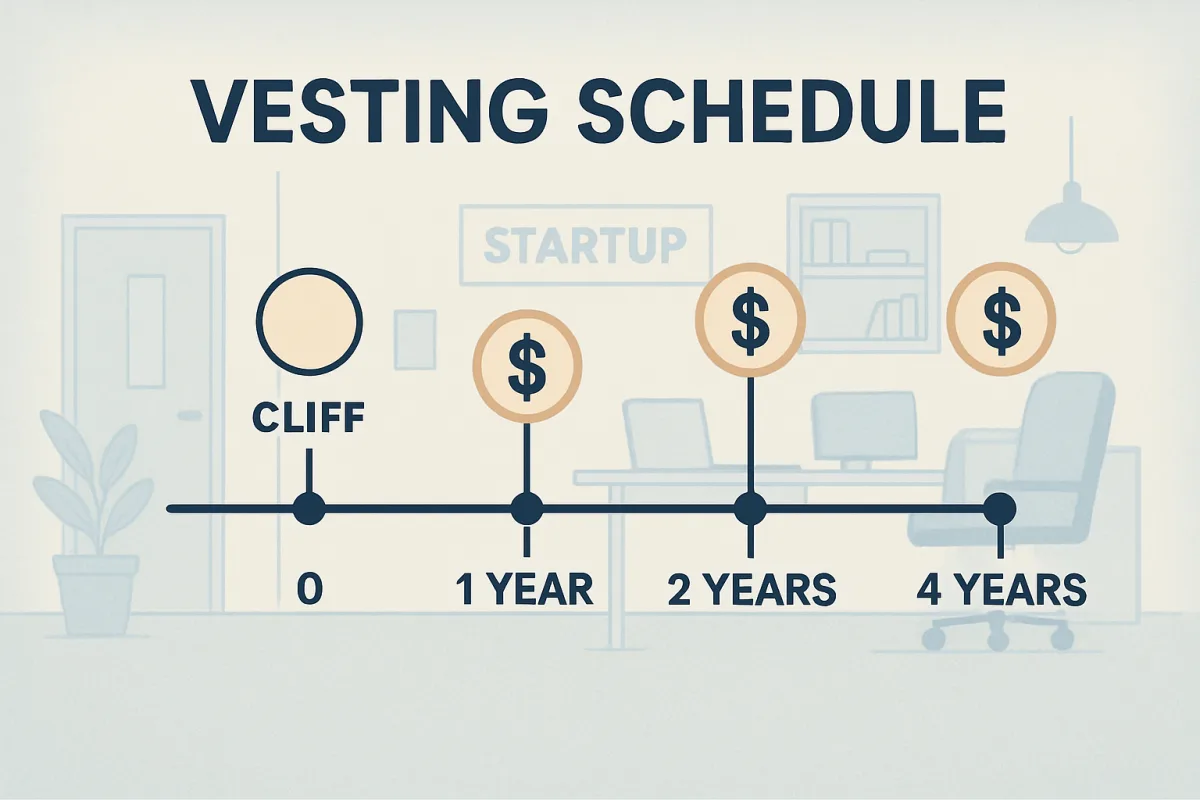
A vesting schedule outlines how and when startup equity is granted to employees or founders over time. Typically, it spans four years with a one-year cliff, meaning no equity is earned in the first year, followed by monthly vesting thereafter. This structure incentivizes long-term commitment and aligns interests between employees and the company. Understanding the nuances of vesting schedules is crucial for both startups and employees to ensure fair compensation and retention.
Quick Summary
A vesting schedule for startup equity is a timeline that dictates how equity is distributed to employees. Commonly set over four years with a one-year cliff, it encourages commitment and aligns interests. This guide covers essential aspects of vesting schedules, including their importance and common structures.
Curator Notes
A vesting schedule is a critical component of startup equity compensation, designed to retain talent and align employee interests with the company's long-term goals. Typically, a standard vesting schedule lasts for four years, with a one-year cliff. This means that employees do not earn any equity during the first year, which serves as a trial period.
After this cliff, equity vests monthly, allowing employees to gradually earn their shares over time. The rationale behind this structure is to incentivize employees to stay with the company longer, reducing turnover and ensuring that key personnel remain invested in the company's success. Startups often use vesting schedules not only for employees but also for founders and early investors, creating a sense of shared commitment to the company's future.
Understanding the details of these schedules is essential for both parties to negotiate fair compensation and retention strategies effectively.
Best Sources
Videos and Community Signals
Distributing startup equity among founders can be tricky. You want to make sure each startup founder is getting compensation for ...
Use our Cap Table → https://yt.slidebean.com/la0 We help you navigate Fundraising → https://yt.slidebean.com/uza -- If you liked ...
Comparison
| Decision Point | Good Starting Choice | When to Go Further |
|---|---|---|
| Vesting Duration | 4 years with a 1-year cliff is standard for most startups. | Some startups may offer shorter vesting periods for early-stage employees to attract talent quickly. |
| Cliff Period | 1-year cliff is common, allowing no equity to be earned in the first year. | Some companies may choose a 6-month cliff to provide quicker equity access. |
| Vesting Frequency | Monthly vesting is typical after the cliff. | Quarterly vesting can be used to simplify administration but may reduce employee motivation. |
FAQ
If an employee leaves before the vesting period is complete, they typically forfeit any unvested equity. Only the shares that have vested by their departure date remain theirs.
Yes, vesting schedules can be modified, but changes usually require approval from the board and may need to be communicated transparently to affected employees.
Yes, vested equity can have tax implications. Employees may owe taxes on the fair market value of shares when they vest, depending on the type of equity compensation.